




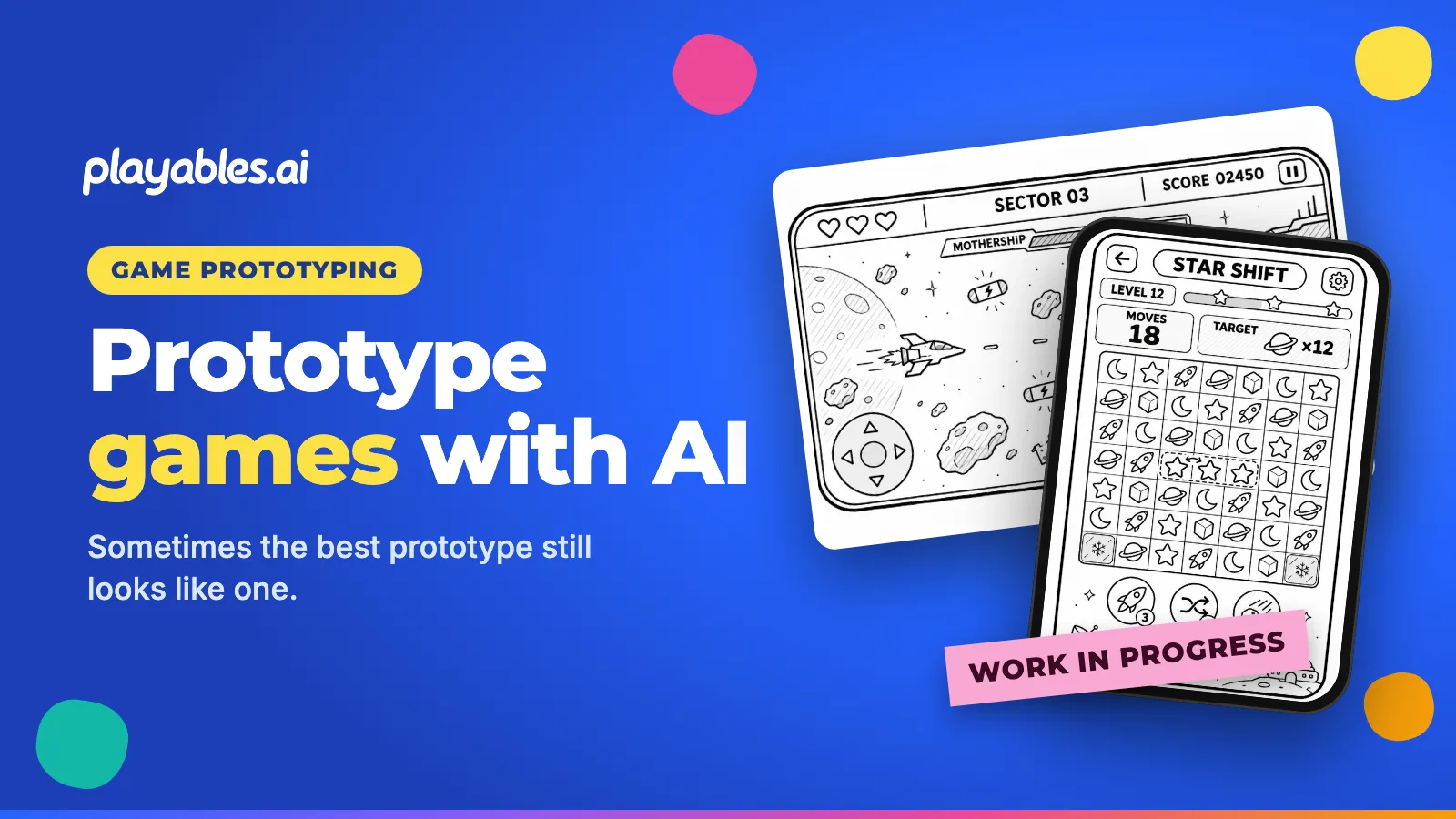
A different way to use playable technology
Playable ads and game prototypes have something important in common: both aim to communicate an experience through interaction.
While playable ads are usually designed to attract and engage an audience, prototypes help teams explore ideas, test gameplay mechanics and make decisions before committing to full development.
PlayablesAI was originally designed to help teams create playable ads, but the same approach can also be used for game prototyping.
Instead of building a complete game, teams can use their own assets and prompts to create an interactive experience focused on a specific mechanic, interaction or concept they want to test. They can then try it out and make changes as the idea develops.
There's no need to build an entire production pipeline just to find out whether a concept works.
A case study with Psyon Games
Psyon Games is a Finnish game studio known for developing games that combine entertainment with health awareness topics.
The team has adopted PlayablesAI as a tool for game prototyping, bringing ideas into a playable form and experimenting with concepts during early development.
“I’ve found that PlayablesAI gives me the result that I actually want, much better than directly working with models like GPT Astra,” says Topias Paasonen from Psyon Games.
Their use of PlayablesAI highlights an interesting opportunity: technology originally developed for advertising can also support the creative process behind game development.
And along the way, an unexpected challenge emerged.
The problem with prototypes that look too polished
AI tools can generate impressive visuals in very little time. While that's useful for creating finished content, it can sometimes cause problems during prototyping.
A prototype might look almost ready for release, even when the underlying gameplay is still experimental.
As one developer put it, the prototype was "too good looking to be a proto."
This can create two challenges:
- People assume the design is already finalized. When presenting a prototype, polished visuals can make it harder to communicate which elements are still placeholders.
- Feedback focuses on the wrong things. Instead of discussing whether the gameplay works, people may focus on visual details that aren't relevant yet.
Traditionally, game developers have used rough sketches, wireframes and greyboxing to communicate that something is still a work in progress.
And sometimes, that's exactly what you want.
Not every prototype needs detailed artwork, animations or finished user interfaces. Rough visuals can be an advantage because they make it clear that the project is still evolving and encourage feedback on the gameplay rather than the presentation.
This is where wireframe-style visuals, simple shapes and placeholder graphics become useful.
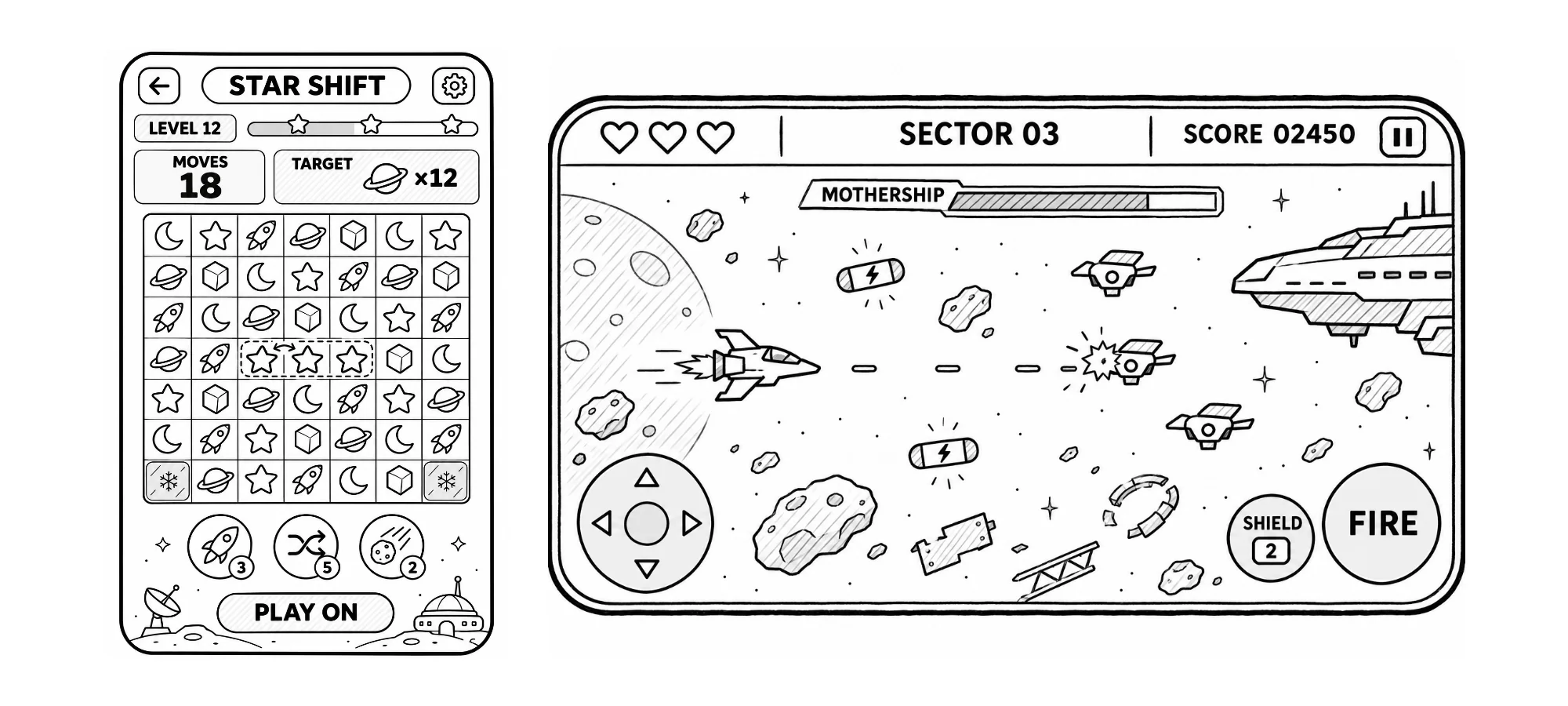
The aim isn't always to create the best-looking version of an idea. Sometimes it's to create the simplest version that lets you test it.
Why playable prototypes matter
Game prototyping is about testing ideas before investing too much time and resources into development.
Static mockups and screenshots can communicate the appearance of a game, but they can't fully demonstrate how it feels to play.
A playable prototype allows teams to test ideas through interaction.
For example, a simple playable can help answer questions like:
- Is the core gameplay mechanic understandable?
- Does the interaction feel intuitive?
- Is the game loop engaging?
- Does the concept work before committing to full development?
And because the prototype is interactive, it's easier to demonstrate an idea to colleagues, stakeholders or potential partners.
The faster teams can build and test these prototypes, the faster they can learn what works, make changes and move forward with their ideas.
As AI-assisted workflows become more common, interactive prototyping offers another way to move from an idea to something people can actually try.
And sometimes, the most useful prototype is the one that still looks like a prototype.
Want to experiment with playable prototyping?
Explore PlayablesAI at playables.ai.